As an Amazon Associate this site earns from qualifying purchases.
The spec table
Quick answer: Most people buying an action camera today are choosing between a $70 body that shoots 4K30 in good light and a $200–$400 body with a large 1/1.3-inch sensor that holds up when the light gets ugly. Sensor size and stabilisation are what separate the two tiers — resolution numbers on the box do not. If you film in bright sun and stay above water, the budget end is genuinely fine; if you shoot dawn, dusk, snow glare or anything indoors, the sensor is where your money goes.
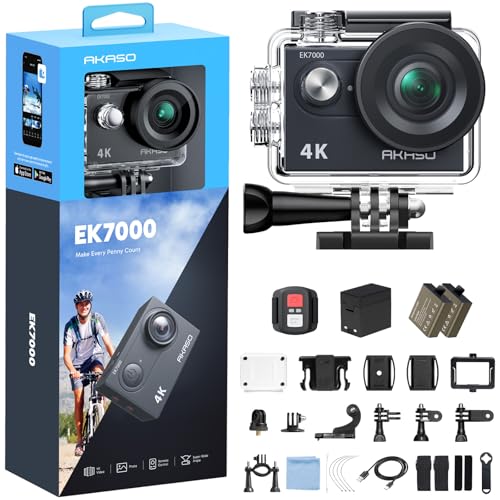
- 4K Ultra HD action camera: Professional 4K30Fps & 2.7K30Fps video with 20MP photos at up to 30 frames per second for incredible photos, which is 4 times the resolution of
- Smooth Stabilization: Built-in Electronic Image Stabilization (EIS) delivers steady and smooth videos. It can enable excellent footage even you or the object is in fast-moving
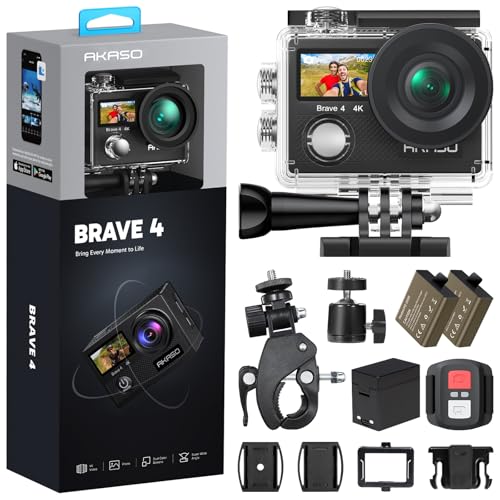
- 4K30fps Video & 20MP Photo: Capture every detail of life’s most beautiful moments with video resolutions from 4K 30fps to 1080P 60fps and 20MP photos so you can relive them
- 170° Adjustable View Angle and Image Stabilization: With four customizable viewing angles of 170°, 140°, 110°, and 70°, capture the perfect perspective for any situation. Built-in
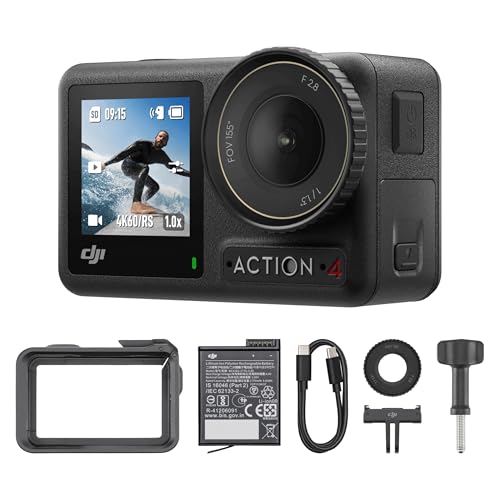
- Superior Low-Light Performance with 1/1.3-inch Sensor - Struggling with grainy footage in low light? Osmo Action 4 action camera 4K uses 2.4μm pixel size for crisp results. Auto
- Pro-Grade Color Science - Worried your videos lack real-life colors? 10-bit color depth captures subtle shades, while D-Log M preserves more detail and dynamic range for
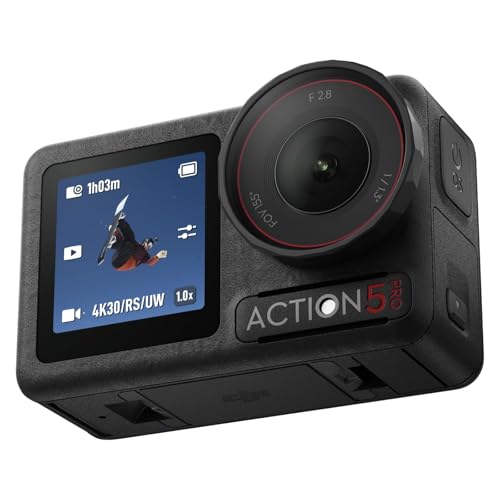
- Pro-Grade Night & Dynamic Imaging - Discover breathtaking imaging quality with Osmo Action 5 Pro action camera 4K and its all-new 1/1.3" sensor. Advanced tech with 2.4 µm large
- Always Centered, Always Focused - Achieve pinpoint accuracy with our advanced 4nm chip. DJI Osmo Action 5 Pro vlogging camera keeps fast-moving subjects perfectly centered in 16:9
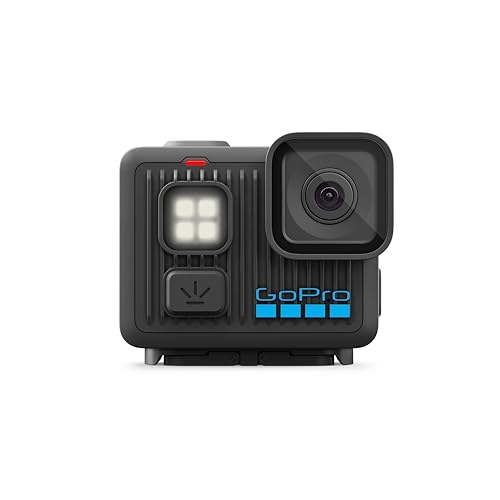
- The Perfect Entry-Level GoPro: Simplified controls let you easily tap and swipe between video, photo and slo-mo modes
- Rugged + Waterproof to 16ft (5m): Completely waterproof and built with legendary GoPro durability, LIT HERO is ready to capture the fun whether you’re ripping through mud, snow or
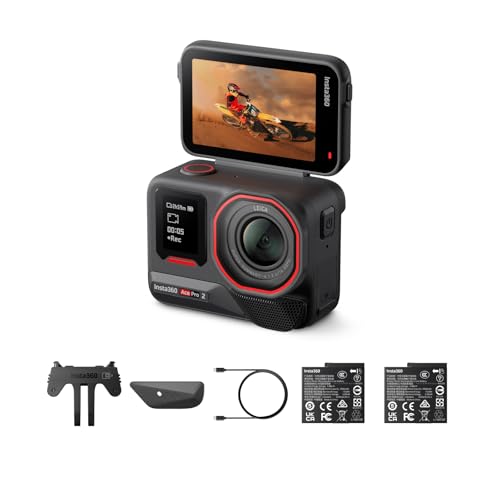
- NEW 1/1.3" 8K SENSOR & LEICA SUMMARIT LENS: Unparalleled imaging with 13.5 stops of dynamic range and 2.4μm equivalent pixel size. Legendary Leica optics meet Insta360 innovation
- DUAL AI CHIP: The first action camera with a dedicated Pro Imaging Chip for noise reduction and image processing, plus a 5nm AI Chip for further processing and powerful
What the sensor number actually buys you
The most useful spec on this page is the one people ignore: sensor size. The DJI Osmo Action 4, Osmo Action 5 Pro and Insta360 Ace Pro 2 all use a 1/1.3-inch sensor with 2.4μm pixels. Bigger pixels gather more light per pixel, which is why those three list low-light performance as a headline feature and the $70 cameras do not state a sensor size at all.
Dynamic range is the sibling spec. Both the Osmo Action 5 Pro and the Ace Pro 2 quote 13.5 stops. That matters most in exactly the scenarios people search for — snow, and surfing in bright sun. In both, you have a blinding highlight (white snow, sun on water) and a dark subject (a person in a jacket or wetsuit). A camera with narrow dynamic range makes you choose: blown-out snow or a silhouetted rider. More stops means it can hold both.
The best action camera buyers guide for your situation depends on how you plan to use it and where.
For frame rate, the Osmo Action 4 goes to 4K120 with a 155° field of view, the GoPro LIT Hero to 4K60, and both AKASO models cap at 4K30. If you want slow motion of a trick or a wipeout, 30fps gives you nothing to slow down.
Waterproofing: read the fine print
Depth ratings on this page are not comparable, because they measure different things.
- The AKASO EK7000 and Brave 4 are rated to 131ft inside the supplied waterproof case. The Brave 4 lists this as diving below 40 metres. That is a genuine dive depth, but it depends entirely on the case being sealed properly, and the case adds bulk and can affect audio.
- The DJI Osmo Action 5 Pro is IP68 rated for 20m underwater with no case. The Osmo Action 4 is waterproof to 18m, also bare.
- The GoPro LIT Hero is waterproof to 16ft (5m). That is splash, rain, mud and pool depth — not scuba.
- Insta360 markets the Ace Pro 2 as waterproof but does not state a depth in the data available here. Check the listing before you dive with it.
Who it's for
Buy a large-sensor camera — Osmo Action 4, Osmo Action 5 Pro or Ace Pro 2 — if you post video publicly, film in mixed or poor light, shoot snow or water where highlights blow out, or want slow motion. The Ace Pro 2's PureVideo mode and dedicated imaging chip, and the Osmo Action 5 Pro's 1950mAh battery rated to four hours and 3.6 hours at -20°C, exist for people who shoot a lot in hard conditions.
Buy a $70 AKASO if the camera is going somewhere you'd be sad to break a $400 one: a kid's first camera, a rental scooter, a helmet on a rough trail, a snorkelling trip. Both AKASO models shoot 4K30 with 20MP stills and ship with mounts. In bright daylight, the gap between tiers narrows considerably.
Who should skip it
Skip the premium tier if your footage is going to a phone screen and stays in your camera roll. You will not see 13.5 stops of dynamic range on Instagram stories.
Skip the budget tier if low light is your normal. Neither AKASO states a sensor size, and no amount of electronic stabilisation fixes a noisy image.
Skip all of these if what you actually want is a vlogging camera for talking to a lens indoors. Action cameras have ultra-wide lenses and small bodies; a gimbal and a phone will serve you better.
Honest trade-offs
"Essential Combo" means fewer accessories. Both DJI listings are Essential Combos. Check what's in the box before assuming you get spare batteries or mounts.
Batteries are the real spec. The Brave 4 includes two 1050mAh batteries and a dual charger, each rated to about 90 minutes — a $70 camera that ships with better battery logistics than some pricier bundles. The Osmo Action 4 quotes 150 minutes from 1770mAh; the Osmo Action 5 Pro up to four hours from 1950mAh. The Ace Pro 2 here is a dual battery bundle.
8K is mostly a reframing tool. The Ace Pro 2 shoots 8K30, but its more useful mode is probably 4K60 Active HDR. Buy it for the sensor and the Leica lens, not the number.
No memory card. The AKASO EK7000 explicitly notes MicroSD is not included. Assume the same everywhere and budget for a fast card.
Both AKASO remotes are not waterproof. Both listings say so plainly.
What to check on the listing before you buy
Prices here are a snapshot and action cameras move hard around Black Friday and Cyber Monday — if you're within a few weeks of late November, waiting is usually rational.
Before checkout, confirm: the current price (not the one quoted here); the exact variant — combos, bundles and standalone bodies sit under the same product page and the cheapest tile is often the barest kit; what's actually in the box, especially batteries, mounts and cases; the warranty terms and who honours them; and the seller, since third-party listings on the same page can differ. Read recent buyer reviews yourself, filtered to the newest ones — firmware and packaging change, and older reviews may describe a different product than the one shipping today.
DJI Osmo Action 4 Essential Combo, Waterproof Action Camera Vlogging Camera — consider instead if…
…you want the big sensor without the flagship price. The DJI Osmo Action 4 Essential Combo, Waterproof Action Camera Vlogging Camera has the same 1/1.3-inch sensor class with 2.4μm pixels, adds 4K120 and a 155° field of view for FPV-style footage, 10-bit colour with D-Log M for grading, and a magnetic quick-release for fast vertical switching. Waterproof to 18m, battery rated 150 minutes down to -20°C.
Insta360 Ace Pro 2 Dual Battery Bundle - 8K Waterproof Action Camera Co-Engineered with Leica, 1/1.3" Sensor, Dual AI Chip, Leading Low Light, Superior Audio — consider instead if…
…image quality is the whole point. The Insta360 Ace Pro 2 Dual Battery Bundle - 8K Waterproof Action Camera Co-Engineered with Leica, 1/1.3" Sensor, Dual AI Chip, Leading Low Light, Superior Audio pairs a Leica Summarit lens with 13.5 stops of dynamic range, a dedicated Pro Imaging Chip plus a 5nm AI chip, PureVideo low-light mode up to 4K60, and a removable Wind Guard for audio. The most expensive option here at $389.99.
GoPro LIT Hero - Lightweight, Compact, Waterproof Action Camera with Built-in Light, 4K60 Ultra HD Video, 12MP Photo, Touch Screen, HyperSmooth Stabilization — consider instead if…
…you want GoPro's mount ecosystem and simple controls. The GoPro LIT Hero - Lightweight, Compact, Waterproof Action Camera with Built-in Light, 4K60 Ultra HD Video, 12MP Photo, Touch Screen, HyperSmooth Stabilization shoots 4K60 with HyperSmooth stabilisation and 12MP photos, and its built-in light has three brightness settings and works even with the camera off. Waterproof to 16ft (5m) — shallower than everything else here.
AKASO Brave 4 Action Camera 4K30 Ultra Hd Waterproof Underwater Camera — consider instead if…
…you want the cheapest route to diving footage. The AKASO Brave 4 Action Camera 4K30 Ultra Hd Waterproof Underwater Camera is case-rated below 40 metres, has a 2" rear and 0.96" front screen, four selectable angles (170°/140°/110°/70°), Wi-Fi and HDMI out, and ships with two batteries and a dual charger for $69.98.
FAQ
Does a bigger sensor matter if I only shoot in bright sun? Less than you'd think for exposure, more than you'd think for contrast. Surfing in bright sun is a high-contrast scene, and the 13.5-stop dynamic range on the Osmo Action 5 Pro and Ace Pro 2 is what stops the water from turning into a white sheet.
Is 8K worth paying for? Only if you crop or reframe in editing. The Ace Pro 2's 8K30 is real, but its 4K60 Active HDR mode is the one most people will actually use.
Do I need the waterproof case? Only for the AKASO models, whose 131ft rating depends on it. The DJI cameras are rated bare to 18m and 20m; the GoPro LIT Hero to 5m without a case.
Is a 2017-era action camera still usable? For daylight 4K30, yes — the AKASO EK7000 has been on sale for years and still shoots 4K30 with EIS at $69.99. What has genuinely improved since then is low-light performance and stabilisation, not resolution.
Related guides
- Best drones, gimbals and content creator gear - camera drones, smartphone gimbals, action cameras, ring lights and stream decks for Small Business Owners
- How to Lower Your Best drones, gimbals and content creator gear - camera drones, smartphone gimbals, action cameras, ring lights and stream decks Costs
- Step-by-Step Best drones, gimbals and content creator gear - camera drones, smartphone gimbals, action cameras, ring lights and stream decks Process
Key Takeaways
- Choosing the right action camera buyers guide means matching the key features to your specific needs and budget
- Read real customer reviews and check the return policy before you commit
- Compare value across models — the priciest option is not always the best fit